Showing posts with label Kibaale National park. Show all posts

Friday, May 22, 2009

ISHASHA NTUNGWE RIVER CAMP

Ishasha Ntungwe River Camp is located in the Southern end of Queen Elizabeth National Park which is famous for the rear tree climbing lions. To reach this gem of a camp you enter the southern gate and drive 75 KMs on a motorable dirt road. The camp was designed by the proprietor Allan with eco-friendly materials and  uses solar energy for cooking, lighting and boiling bath water.


We left Kibale National Park at 4 PM and arrived in Queen Elizabeth National Park at 6 PM. We then detoured to Simba Safari Camp to get journalists who were covering our trip and finally arrived at Ishasha Ntungwe River Camp at 10 PM. Enroute we encountered assorted mammals like Elephants, Wildebeest, Warthogs and Uganda Knobs, to mention but  a few, and were careful to avoid knocking a viper crossing the road. We approached the camp through a dirt road with dumb surroundings that lowered our hope for a successful lion-hunt.

  Fortunately, when we got to the camp gate, our hope was immediate lifted. The camp was a site to see with well lit pristine gardens.  The Ishasha Ntungwe River Camp manager showed us our tents (which had modern facilities) and were later invited for a sumptuous four -course dinner. After supper we set out to the camp fire and the manager narrated stories of wild animals and the local community amidst sounds from the forest and the flowing Ishasha River half a kilometer from the camp. We retired to bed at 12 PM since we had an early start in order to see the tree climbing lions.


Our day of mishaps began with all of arriving late for breakfast. We had an 8:30am departure to see the lions; unfortunately, we were an hour behind schedule and to top it off, the vehicle ran out of diesel! The driver ran to buy the fuel and returned with petrol. As he poured it in the tank, I asked, “why that diesel was pink?”- mishap number four! He immediately stopped pouring and we then sent someone else to get the diesel while we emptied the fuel tank; not exactly an easy task, might I add! When we finally left, we had lost two hours.

  On arrival into the park, the lions had probably gone to rest. Our two-hour search only yielded Elephants, Wildebeest, and Water Bucks, Wart hogs and other antelopes but no tree lions. We turned back to the camp in low spirits. The chef cheered our spirits by doing some magic and came with a three course lunch complete with organic vegetables grown at the camp. The meals at the camp were superb and thanks to the creative chef, who conjured something out of nothing.


Monday, May 18, 2009

Bigodi Wetlands Sanctuary

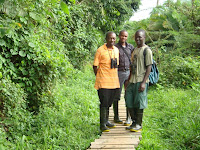
walk way in Bigodi Wetlands

Bigodi wetlands sanctuary is managed by Kibaale Association for Rural and Environmental Development (KAFRED) on behalf of the community. This sanctuary is one of the most successful community based project initiated and managed by Ugandans. The wetland is 8 kilometers long and is an important wildlife corridor for Kibale Forest. The local community benefits through schools, clinic, roads and other community services given free to its members. The community now appreciates conservation of biodiversity and the benefits of ecotourism.

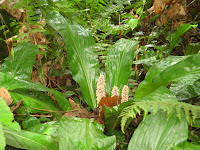
a plant species in Bigodi Wetlands


We set off for Bigodi at 12.30pm. En route, we found moulds of elephant dung which provided the only evidence of the presence of the rear Forest Elephant. We arrived at the booking office at 1 pm and after paying a fee of 10,000 shillings (5 US Dollars), we met Ivan our guide. We were then provided with a pair of boots and binoculars. Ivan was very knowledgeable about birds, plant species and primates. The trail in Bigodi takes about 3 hours we opted to do half trail as our Itinerary was very tight.

  On the way to the trail we passed by a group of children who had gone to fetch water from the swamp. We then came across a tree hosting a very large colony of the Great Blue Turaco; Ivan told us this sanctuary holds the largest colony of the Turaco in the world. It is aptly named “The Home of The Blue Turaco”.


we on a walk way to the  Bigodi Wetlands

As we started the trail the temperatures dropped significantly and visibility decreased to a few meters. After walking for 15 minutes our guide told us to stop and pointed to some trees, showing us monkeys which we failed to see; all we see were moving branches. Further into the wetland we saw different species of monkeys like Grey cheeked Mangabey, Olive Baboons, Black and White Collobus, Red tailed, Vervet and Blue tailed monkeys. We were told that there are other mammals like bushbucks, sittings and otters.

The binoculars came in very handy for birding. We saw and identified 10 species during our one - hour excursion. We saw the black winged grey bishop, Emerald Cuckoo, King Fisher, Grey winged Robin Chat, Blue Shrouded Robin Chat, Yellow vented bulbul, Long Crested Eagle. The swamp in the Bigodi Wetlands Sanctuary was dump but it could also flood and get soggy in the dry season. To overcome some difficult areas places, board walks ways were made. There also tree houses that are used as pavilions for avid bird watch towers

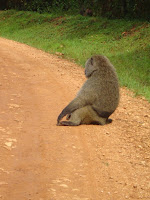
picture of a baboon on the road


On return from Bigodi Wetlands Sanctuary we had lunch at Kibaale Primate Lodge set off for Queen Elizabeth National Park, on our way we met a large community of Baboons and Chimpanzees playing along the road, we passed by Ndali Crater lake and finally got to Simba Camp at 5.30 pm.


Tuesday, May 12, 2009

Excursion to Kibaale National Park

There's more to Kibaale, than a wild variety of primate species! David K(not real name), was part of a group excursion to the Kibaale National Park with Karibuni Safaris. When asked about his trip, this is what he had to say...

What did you learn on your trip about Kibaale and what stood out to you on arrival at the park?

Kibaale is small national park established in 1993 and home to 13 species of primates, 335 species of birds, 350 species of butterflies and 351 identified species of trees. On
 21st March, I was invited by Allan the proprietor of Ishasha Itungwe River Camp to visit his camp and make a stopover at Kibaale National Park. We set off at 4 PM and arrived at Primate Lodge 5 hours later, we were welcomed with a banana milkshake. We later had a delicious dinner and set off to camp fire, finally resting at 12 pm.


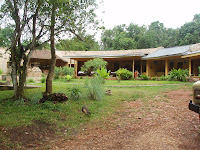
Kibaale primate lodge

What did this excursion entail?

Kibaale Primate Lodge is at the center of this forest with eco-buildings designed to blend with forest. To reach your tent camp you move through the forest and cannot see your neighbor’s tent or banda making you a part of the forest.

 In the morning 8am we were briefed by the game rangers and set off the trail for over 3 hours trekking in this pristine and serene environment. We were greeted by a Red Capped Robin chart bird, which imitated our guides whistle. We saw the Emerald Culcoo, Great Blue Toracco and many other birds.
Somewhere in the trail we heard a chimpanzee thumping a tree stamp, our guide told us this is a group of habituated chimpanzees and he was calling his mates to see us. All of a sudden we were surrounded by a community of over 50 chimpanzees of all ages. We saw a chimpanzee grooming its mate and instead of throwing the tick she ate it. (Sure and natural method of disposal). We saw other primates like Blue tailed, Red Tailed, L, Hoesti, Grey-Cheeked Mangabey, Vervet, Black and White Colobus monkeys and Olive baboons.


black and white colobus monkeys


picture of black and white colobus monkeys


olive baboon


picture of olive baboon


grey-cheeked mangabey
... Having completed this exciting trail and seeing many primates and birds, the next item on our itinerary was a visit to Bigodi Wetland sanctuary. I will tell you more about the amazing Bigodi Wetlands Sanctuary in my next blog.